Blog
Master WooCommerce Shipping in Japan

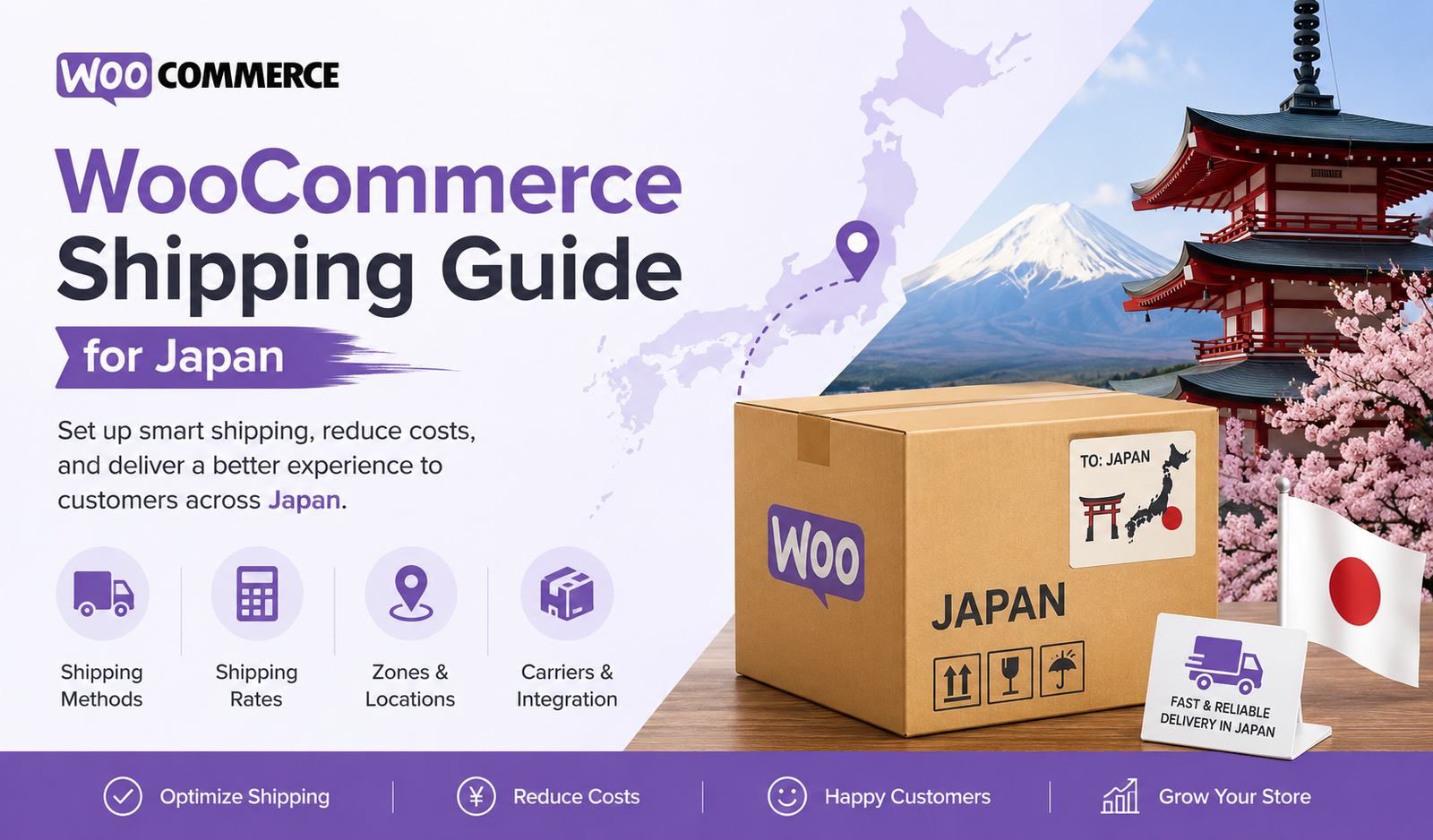
Japan represents one of the most lucrative e-commerce markets globally. Shoppers here expect a flawless digital experience, and that expectation extends directly to how their purchases are delivered. For merchants using WooCommerce, tapping into this market requires more than simply translating your website into Japanese. You must understand the unique logistics ecosystem that governs local deliveries.
Delivery standards in Japan are exceptionally high. Customers are accustomed to receiving their packages within a day or two, often picking the exact time their parcel will arrive. A missed delivery or a poorly formatted address at checkout can easily result in a lost customer. To succeed, your WooCommerce store needs a shipping strategy tailored specifically to local habits.
This guide explores the essential components of shipping within Japan using WooCommerce. We will cover the major carriers you need to know, how to optimize your checkout process for Japanese addresses, and the specific delivery features local shoppers look for before hitting the buy button.
Understanding the Japanese Shipping Landscape
The logistics network in Japan is renowned for its speed, reliability, and precision. Packages rarely get lost, and delivery drivers take immense pride in handling goods with care. For an online retailer, this means the bar is set high from the start.
Shoppers expect transparency regarding shipping costs and delivery times. They also expect a degree of flexibility that might seem complex to international sellers. For instance, allowing customers to choose a specific two-hour window for delivery is not just a premium perk; it is a standard expectation. If your WooCommerce store cannot accommodate these localized requirements, cart abandonment rates will likely spike.
Top Domestic Shipping Carriers in Japan
To build a reliable shipping framework, you need to partner with the right carriers. Three main companies dominate the domestic logistics market. Integrating their services into your WooCommerce store is a critical first step.
Yamato Transport (Kuroneko Yamato)
Yamato Transport, commonly known by its black cat logo (Kuroneko), is the largest and most highly regarded parcel delivery service in Japan. They offer exceptional reliability and a wide range of delivery options, including chilled and frozen shipping (Cool Ta-Q-Bin). Yamato is often the preferred choice for consumers due to their extensive network and user-friendly tracking systems.
Sagawa Express
Sagawa Express is another major player in the Japanese logistics sector. They are heavily utilized by businesses for both B2B and B2C deliveries. Sagawa often provides competitive rates for larger volume shippers. While their consumer-facing reputation is slightly different from Yamato’s, they remain a highly dependable option for e-commerce stores looking to balance cost and efficiency.
Japan Post
Japan Post (Nippon Yubin) offers a comprehensive suite of delivery services ranging from standard mail to expedited parcel delivery (Yu-Pack). They are particularly useful for smaller, lighter items and offer excellent coverage across rural areas. Japan Post is also the primary carrier for international shipments entering the country.
Optimizing WooCommerce for Japanese Addresses
One of the biggest hurdles for standard WooCommerce setups in Japan is the address format. The default Western address structure (Street, City, State, Zip Code) is entirely backward for Japanese consumers.
In Japan, addresses start with the postal code, followed by the prefecture, city, district, block, and finally the building name and apartment number. Forcing a Japanese shopper to use a Westernized checkout form causes friction and confusion.
To resolve this, you need to use localized plugins. Several plugins specifically adjust the WooCommerce checkout fields to match the Japanese format. Furthermore, many of these plugins offer auto-fill functionality based on the postal code. When a user types in their seven-digit postal code, the prefecture and city fields populate automatically. This small adjustment significantly streamlines the checkout process and boosts conversion rates.
Essential Delivery Features for Japanese Shoppers
Offering standard flat-rate shipping is rarely enough. To truly compete, your WooCommerce store should support the unique delivery methods popular among Japanese consumers.
Specific Time Slot Delivery
As mentioned earlier, time-definite delivery is a staple of Japanese e-commerce. Carriers like Yamato and Japan Post allow senders to specify delivery windows (e.g., 8:00 AM–12:00 PM, 2:00 PM–4:00 PM). Providing this option at your WooCommerce checkout shows respect for your customer’s time and drastically reduces the rate of redeliveries.
Convenience Store Pickup (Konbini Uketori)
Japan is home to tens of thousands of convenience stores (konbini) like 7-Eleven, FamilyMart, and Lawson. Many shoppers prefer to have their packages delivered to a local konbini rather than their home. This allows them to pick up their items at any hour of the day or night. Integrating a konbini pickup option requires specific APIs or third-party logistics partners, but it is highly attractive to busy urban professionals.
Cash on Delivery (Daibiki)
While credit card usage is high, a significant portion of the population still prefers Cash on Delivery (COD), known locally as Daibiki. The customer pays the delivery driver in cash when the package arrives. The carrier then remits the funds to the merchant. Setting up Daibiki in WooCommerce is relatively simple using the built-in COD payment gateway, though you will need to account for the handling fees charged by the carrier.
Handling International Shipping to Japan
If you are shipping to Japan from overseas, the dynamics change. Domestic carriers will handle the final mile, but you must first navigate customs and international logistics.
Transparency is your best tool here. Make sure your WooCommerce store clearly outlines estimated delivery times for international shipments. More importantly, be upfront about customs duties and the Japanese consumption tax. If a customer is hit with unexpected fees at the door, they will likely refuse the package. Using plugins that calculate and collect duties and taxes at checkout (Delivered Duty Paid, or DDP) creates a much smoother experience.
Streamline Your Japanese Shipping Strategy
Shipping in Japan is a finely tuned machine. By understanding the local carriers, adapting your checkout process to match regional address formats, and offering the precise delivery options local shoppers expect, you can turn logistics into a competitive advantage. Take the time to configure your WooCommerce store properly with localized plugins, and you will build trust with one of the most dedicated consumer bases in the world.